Why Hyperlocal is the Secret to Growing Your Small Business
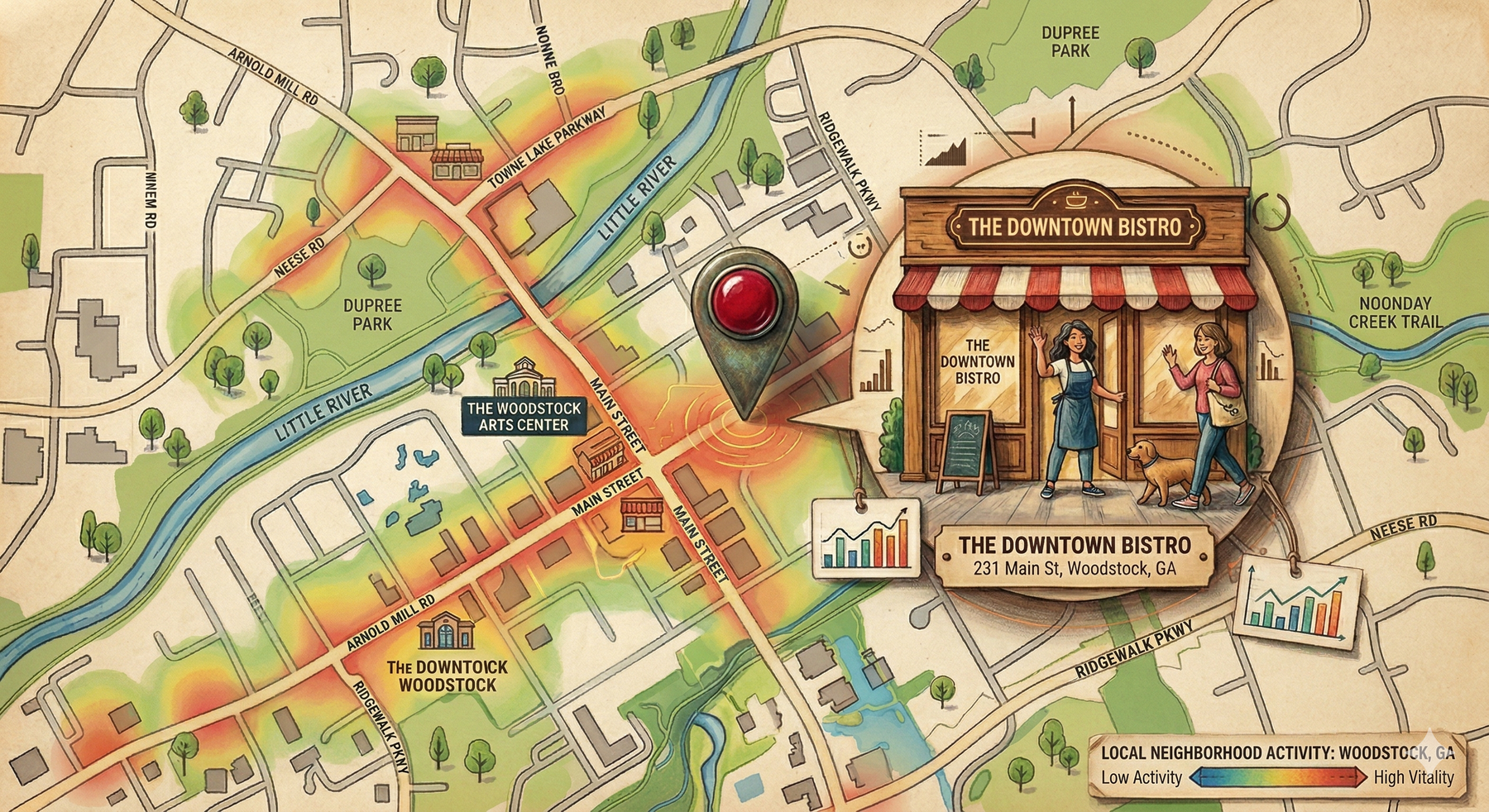
Discover why hyperlocal marketing is the most effective way for small businesses in 2026 to grow their brands.
For years, the dream of the American small business was to scale as much as possible. Business owners were told that to succeed, they needed to reach every person in the tri-state area or dominate the top of global search results. But as we move through 2026, the landscape has shifted. Digital noise is at an all-time high, and national brands are spending millions to buy their way into your customers' screens.
According to recent marketing data, the average consumer is now exposed to up to 10,000 digital ads per day. This digital saturation has led to a phenomenon known as digital fatigue. When everyone is shouting globally, the only way to be heard is to speak locally.
The secret weapon for the savvy entrepreneur isn’t going wider. It’s going deeper. It’s called hyperlocal marketing, and it is the most effective way to build a "moat" around your business that no algorithm can cross.
1. Winning the Neighborhood Effect
When you focus your marketing on a specific, high-value community, you trigger what’s known as the Neighborhood Effect. This happens when your brand becomes a recurring character in residents' daily lives. They see your van parked in a neighbor's driveway, they see your team at the local 5K, and they see your face in their monthly Greet magazine.
This repetition creates a level of psychological safety that a random Instagram ad can never achieve. In a hyperlocal ecosystem, you aren't just a service provider; you are a neighbor. Statistics show that 82% of consumers trust print advertisements (like community magazines) more than any other channel when making a purchase decision. Plus, 71% of people say physical mail feels more personal than digital communication.
In 2026, trust is the new currency. People buy from neighbors they know, like, and trust. By saturating a single community, you aren't just advertising — you are establishing social proof through physical proximity.
2. Reaching the Right 1,000 People
Most small businesses throw away 40% to 60% of their marketing budget on "wasted reach" — serving ads to people who live too far away, don't own homes, don't fit their target demographic, or simply can’t afford their services.
Hyperlocal marketing is the solution to wasted spend because it allows for extreme efficiency. Instead of trying to reach 50,000 people who might care, you focus on the few hundred or thousand households who actually have the need and the means for your services.
Consider these 2026 industry benchmarks:
- Response Rates: Direct mail response rates are currently 5 to 9 times higher than those of email, paid search, or social media.
- Engagement: A single piece of high-quality community mail lingers in a home for an average of 17 days, compared to just seconds for a digital ad with no print component.
- Recall: Print marketing has a brand recall rate of nearly 78%.
By dominating a specific zip code or community, your growth potential skyrockets because every dollar spent lands in a mailbox that matters. You aren't paying for eyes. You're paying for qualified neighbors.
3. Creating Brand Loyalists
It is much easier to turn a specific community into a group of raving fans than it is to do the same with a larger market. Hyperlocal marketing fosters a “word-of-mouth” phenomenon at a much quicker pace. For example, when you provide excellent service to one resident in a Greet community, that resident tells their neighbor at the mailbox or during their kids’ baseball game.
Because you’ve already established a physical presence there, that recommendation carries much more weight. In fact, 84% of consumers trust online reviews and personal recommendations as much as word of mouth. When your physical presence (a compelling ad in the magazine on the coffee table) meets the digital presence (the same ad recreated digitally and served to homeowners as they scroll online), you create a trust loop that national competitors can’t break.
Greet’s National Footprint
While we focus on the power of the local community, Greet is part of a national network. We have vetted communities across the country where high-income homeowners and top-tier local businesses connect every single month. We currently serve communities in the following states:
- California
- Colorado
- Florida
- Idaho
- Illinois
- Indiana
- Massachusetts
- Michigan
- Montana
- New Hampshire
- New Mexico
- Oklahoma
- Oregon
- Pennsylvania
- Rhode Island
- South Carolina
- Texas
- Virginia
- Washington
- West Virginia
Roots Before Branches
Growth doesn't always mean expanding your borders; often, it means strengthening your roots. By adopting a hyperlocal strategy, you stop competing on price with national giants and start competing on relationships. In the modern economy, the business that owns the community owns the future.
Frequently Asked Questions (FAQ)
Does hyperlocal marketing limit my growth potential?
Absolutely not! It provides a solid, profitable foundation. Once you have captured one community and made it a recurring source of revenue, you can replicate that exact model in the next community (if you have the bandwidth or interest). It's about scaling vertically, not just horizontally.
How do I choose which community to focus on?
Consider the “density of opportunity." This includes communities with high homeownership rates, active community engagement, and high median household incomes. Those are the exact parameters we consider when vetting locations for Greet magazines. A great place to start is searching our Locations page to connect with your local Greet publisher.
What is the best way to start a hyperlocal campaign?
Start with visibility. Get involved in community stories, sponsor a local event, and ensure you have a physical presence in the homes of the local neighborhoods through a trusted medium like Greet magazine. Consistency is key: hyperlocal marketing is a marathon, not a sprint.
How does print marketing help my SEO?
While a magazine is physical, it drives digital actions. Statistics show that 60% of people visit a brand's website after seeing it in a print catalog or magazine. This increase in direct, high-quality traffic signals to search engines that your site is a trusted resource in that area, boosting your local search rankings. You can also consider platforms that provide print and digital marketing in tandem. Through Greet, you can advertise in your monthly hyperlocal publication and retarget the same homeowners with a digital version of your print ad that directs traffic directly to your website or Facebook page, increasing your marketing touchpoints and brand awareness.
About Greet Magazines
At Greet, we believe that communities are safer, friendlier, and more vibrant when residents and local businesses are connected. Our monthly publications are delivered directly to influential communities across the country, featuring the stories of the people who live there and the local experts who serve them. We provide a beautiful, high-quality print magazine helping homeowners enjoy the best their community has to offer.