Finding Strength, Hope, and a Voice After Cancer
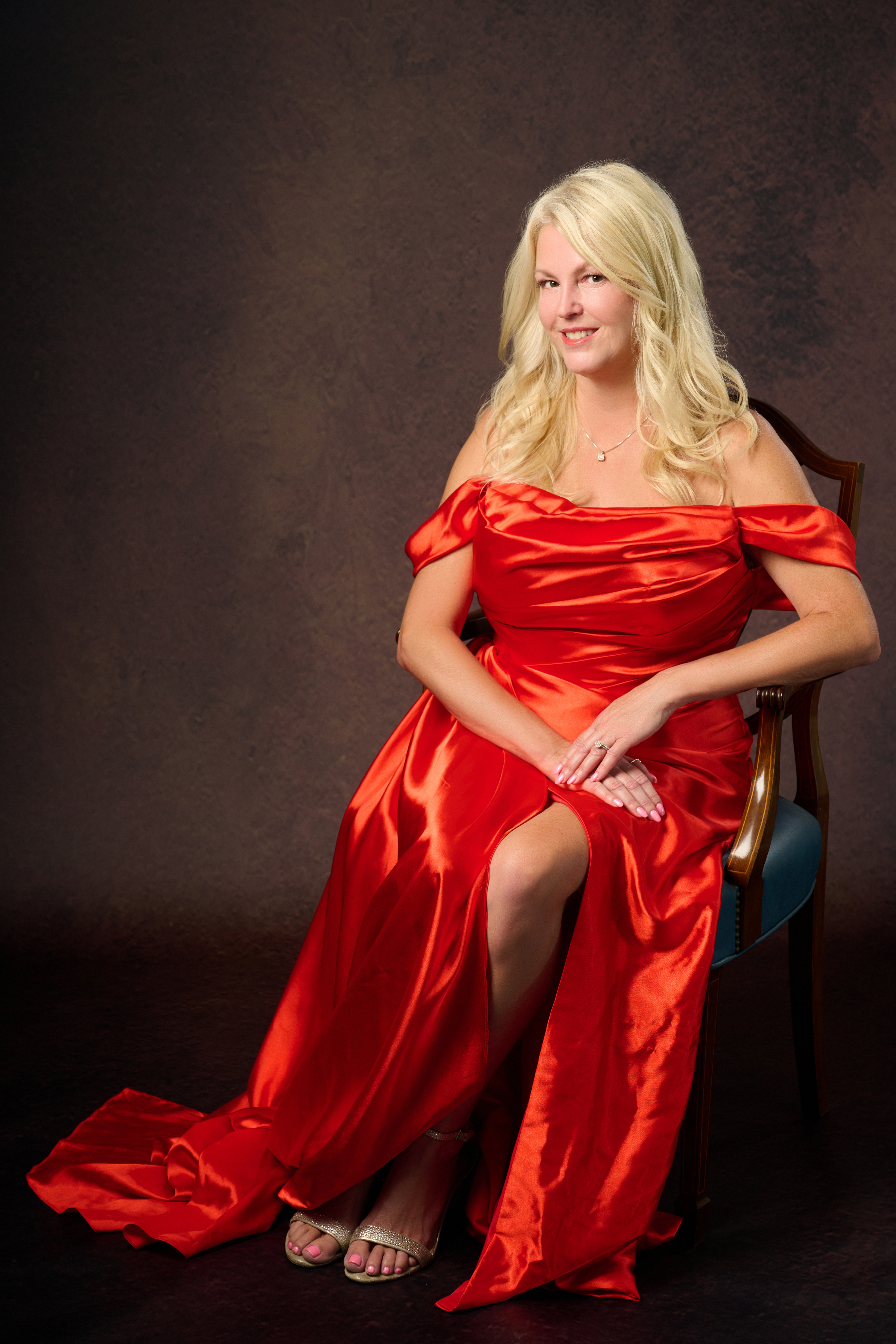
My name is Carol O'Donnell. I'm fairly new to the world of being a breast cancer survivor, and this is my story.
At the end of March 2022, I got incredibly sick one night. I wasn't feeling much better a few days later, so after much urging from my husband and daughter, I finally agreed to go to the doctor. I went to see my PCP, Dr. Valerie Danielson, and after running some standard tests, we discovered I had a viral infection that had mostly run its course. Completely unrelated, she also suggested that I go get my first-ever mammogram. We had discussed it several years prior, but with no family history of any cancers, we had decided it could wait until I was 50.
The next day, I went to a senior center in Manchester and had it done. It was much easier than I'd built it up in my head to be or what others had told me. The technician told me not to get stressed if I had a finding, so when I received a call back that I needed to go to the Breast Center at the Elliot Hospital, I didn't think much of it. When I got there, I asked them why I was scheduled for both a mammogram and an ultrasound. They told me they only do the ultrasound if the mammogram shows something that needs to be looked at further. I then asked what the odds were of this being something bad, and they told me 1%. As far as I was concerned, this would be a quick, easy appointment, and I'd be back home shortly. I didn't have any lumps, bumps, or warning signs of something being wrong. I did the first mammogram and then was asked to do another right after. Then an ultrasound. To be honest, I did start to panic a bit, but I convinced myself they were just being thorough. The radiologist then came back in and said I had many areas of concern in my right breast and would need multiple biopsies. To say I was shocked and scared was an understatement. I scheduled the first two biopsies and was lucky enough to have Dr. Lana Shikhman become my breast doctor. I went to do the first biopsies, and let's just say that a stereotactic core needle biopsy isn't exactly a good time. The machine happened to break down partway through the second one, and I couldn't wait to get out of there. Dr. Shikhman and I agreed that it was a sign that I'd had enough for the day, and now it was a waiting game on pathology. That Friday, at exactly 5 pm, I got the results back. They ask that you not look at your results prior to your doctor having a chance to review them, but there was no way I could wait. Our very good family friend, Dr. Dan Rosenbaum, came over and went over everything with me. The report showed that I had DCIS. Ductal carcinoma in situ. Technically, a stage O breast cancer that is still contained in the ducts.
I then spent countless hours researching both DCIS and invasive breast cancer.
I started reading numerous medical journals, studies, and clinical trials. I scheduled a second opinion at Dana Farber to confirm my diagnosis. I attempted to join a clinical study called COMET, which was more of a watch-and-wait approach to my diagnosis. Unfortunately, I was not eligible due to the extent of my disease. I joined countless Facebook and Instagram groups to learn from and discuss with others what I was potentially looking at.
In the meantime, Dr. Shikhman and I went back and forth over what was next. I felt that the measures that were being discussed were too extreme. I couldn't wrap my head around cutting off part of my body on a what-if. I then had a breast MRI performed, and an additional area of concern was found. We agreed to two more biopsies. I was convinced that these tests would be fine. At exactly 5 pm that following Friday, while sitting with my friends at Pressed Cafe, I got my results. Triple Positive Invasive Ductal Carcinoma. I was devastated. My hope of potentially having a lumpectomy was gone, and I had to come to terms with needing a mastectomy. It was incredibly hard and emotional. I went through so many feelings. Disbelief, anger, sadness, fear. It was the end of the school year, and I was a wreck. My daughter was a freshman in college, almost 1000 miles away, and she was trying to cope with the continuous bad news alone. My son, who was a freshman in high school, didn't talk about it as much, but I knew how it was weighing heavily on him as well. I drove him to the bus for varsity lacrosse playoffs and forgot it was graduation day. As soon as he got out of the car, I pulled over and lost it.
Would I be around to see my own kids graduate in a few years? My husband was my rock, but I knew he was struggling too. He had lost a cousin in her 30s to breast cancer, so this was hitting even closer to home for him.
I started to educate myself on HER2-positive breast cancers. I also began my search for the right plastic surgeon for my reconstruction. I went from Boston to other practices in Massachusetts. My 4th and final visit was with Dr. Emese Kalnoki-Kis, or Dr. K as we all called her. She had just joined the plastic surgery department at the Elliott. After discussing both of our thoughts on the surgery, I knew she was the right doctor for me.
On August 5th of 2022, I went to the Elliot for my double mastectomy. I had never had a surgery before or been under heavy anesthesia, and the lead-up to it was terrifying for me. I remember staring up at the ceiling while Dr. K. was drawing the surgical lines on my body, trying to hold it together. She grabbed my hand and told me to look at her. She assured me these were the lines for my reconstruction and to look at them as putting me back together, not cutting me apart. That made a world of difference to me. She and Dr. Shikhman performed my double mastectomy with direct to implant reconstruction, which lasted about 6 hours or so, and I was able to go home the same day. The recovery was much better than I expected, and the icing on the cake was finding out that my sentinel node biopsy was clear. I wouldn't need radiation.
Now it was a waiting game on pathology. I had learned that HER2-positive breast cancer almost always leads to chemotherapy, but I still had hope that it wouldn't be the case or that it would be small
enough to not be needed. About two weeks later, my results came back, and they were worse than we expected. I had Atypical Ductal hyperplasia and four tumors made up of DCIS, LCIS (lobular carcinoma in situ), and larger areas of triple-positive invasive ductal carcinoma in the mix. I would now need both chemotherapy and immunotherapy.
As scared as I was of surgery, the thought of chemotherapy was even worse. I joined additional online groups to learn about different chemotherapy drugs, what to expect, things to help during treatment, etc. I spent hours, days, and weeks doing more research. I have no doubt I drove my friends, family, and doctors a bit crazy, but to me, knowledge was power when I was feeling pretty powerless.
I met my oncologist, Dr. Gina Divenuti, and we discussed the odds of cancer coming back. It was 40% without further treatment. That was more than high enough odds to do what I was dreading. I had a port put in, and at the beginning of November, I began my 12 rounds of a drug called Taxol for chemotherapy and 25 rounds of an immunotherapy drug called Herceptin for the HER2 part of my diagnosis. I ended up having a pretty bad reaction to Taxol about 4 minutes into my first infusion, but my nurses and the doctor on call that day ran over and helped me immediately. It was incredibly scary and painful, but amazingly enough, when they started it again, at a slower pace, my body tolerated it better. I can't say enough good things about my nurses, doctors, and staff during this crazy, rough time. Chemo is not easy, and they most definitely were one of the main reasons I got through it. The Solinsky Center at the Elliott literally became my home away from home for the next 3 months, and my wonderful family and friends volunteered to be with me every week during these very long days.
Prior to starting treatment, I was very concerned about what these drugs would do to me and went out of my way to learn how to prevent as many side effects as possible, especially regarding hair loss. I was lucky that my cancer center was already offering the option of cold capping with the Paxman scalp cooling system, which I did. I microbladed my eyebrows and learned that freezing my hands and feet would help prevent neuropathy. I also ate ice chips to prevent mouth sores. I treated my time during the chemo part of my day like a job and took it very seriously. As a result, I was so grateful to save about 70% of my hair and have avoided most of the worst or more permanent side effects chemotherapy can cause. I finished my 12 cycles of chemotherapy in January of 2023. I still had 13 more immunotherapy infusions to go. Once every 3 weeks. I also started looking into a reconstruction procedure called DIEP flap, which uses your own body tissue to reconstruct breasts. I found my microsurgeon, Dr. Ryan Cauley, at Beth Israel in Boston, in one of my online groups.
In the meantime, I found a few new lumps on my chest. They came back as BIRADS 3, probably benign. Not the most reassuring news. Any question I had about doing a DIEP flap was solidified, and I did the preliminary consultation and testing. On June 2, 2023, I went to Boston and had it done. This was a much bigger and more extensive surgery than my first. It involved tissue transplant from my stomach to my chest, along with the reattachment of hundreds of blood vessels. It took two surgeons about 12 hours to complete. The surgery went very well, and I was expecting to go home in two days. Unfortunately, I hemorrhaged on the second day and needed a few blood transfusions, and was there for 6 days. The recovery was much harder and longer, and had some complications. But I would do it all over again in a heartbeat, and fortunately, the lumps I had found were indeed benign. I finished immunotherapy on October 19th, 2023, and rang the bell for the final time. I truly felt like I had climbed a massive mountain and was so grateful to be on the other side. In November, I had the second phase of DIEP flap, and the final phase was completed a year later in November 2024.
This past spring, just as our kids were graduating, I had what was hopefully our final scare. After my routine annual breast checkup appointment with Dr. Shikhman, we decided to do an MRI of some suspicious tissue. The MRI came back questionable, which led to an additional ultrasound and several biopsies. My family was once again incredibly worried, but this time we finally received positive news. Literally, as my son was about to play his final lacrosse playoff game of his high school career, we got the call in the parking lot that the findings were benign. Finally, it would be a summer to look forward to without surgeries or treatments.
While cancer is a devastating diagnosis, it has had a meaningful impact on my family’s lives. We all participated in our first Relay for Life together, where I gave the opening survivor speech. Our daughter, Taylor, who just recently began her first job as an RN, was an amazing caregiver during my treatment and surgeries and pursued becoming an oncology nurse at the Mayo Clinic before settling a little closer to home. My husband, Paul, kicked off a breast cancer fundraising campaign last fall. Our youngest, Evan, became involved with the American Cancer Society and their Men Wear Pink campaign as the youngest ever ambassador for NH. He was one of their top participants, raising thousands of dollars for breast cancer education, research, and prevention. I could not be prouder of all of them for making lemonade out of the lemons we were handed.
When this journey began, I was at a loss as to what to do. I feel like a different person at times than who I was before cancer. My family was incredible through everything and my "reasons why".Our friends and community were beyond supportive, generous, and kind. I am also so beyond grateful to my fellow survivors who helped guide me through so much of this. It is amazing that so many strangers reach out to help those who are just starting down this scary path, and some of those strangers even become friends. I hope that others just starting out look to me for the advice that I was so lucky to receive from those who went through it before me. I have tried very hard to be an open book about everything I've been through, and at times, I am now the one mentoring other women who are newly diagnosed, scared, and struggling. I want to stress how important it is to educate and advocate for yourself. The most important thing I have learned is that if it’s important to you, then it’s important -and your health should always be at the top of that list. Screenings truly do save lives. I know they saved mine.