Building a Life for Himself
At 101, William Morin reflects on a life of service, craftsmanship, and perseverance.
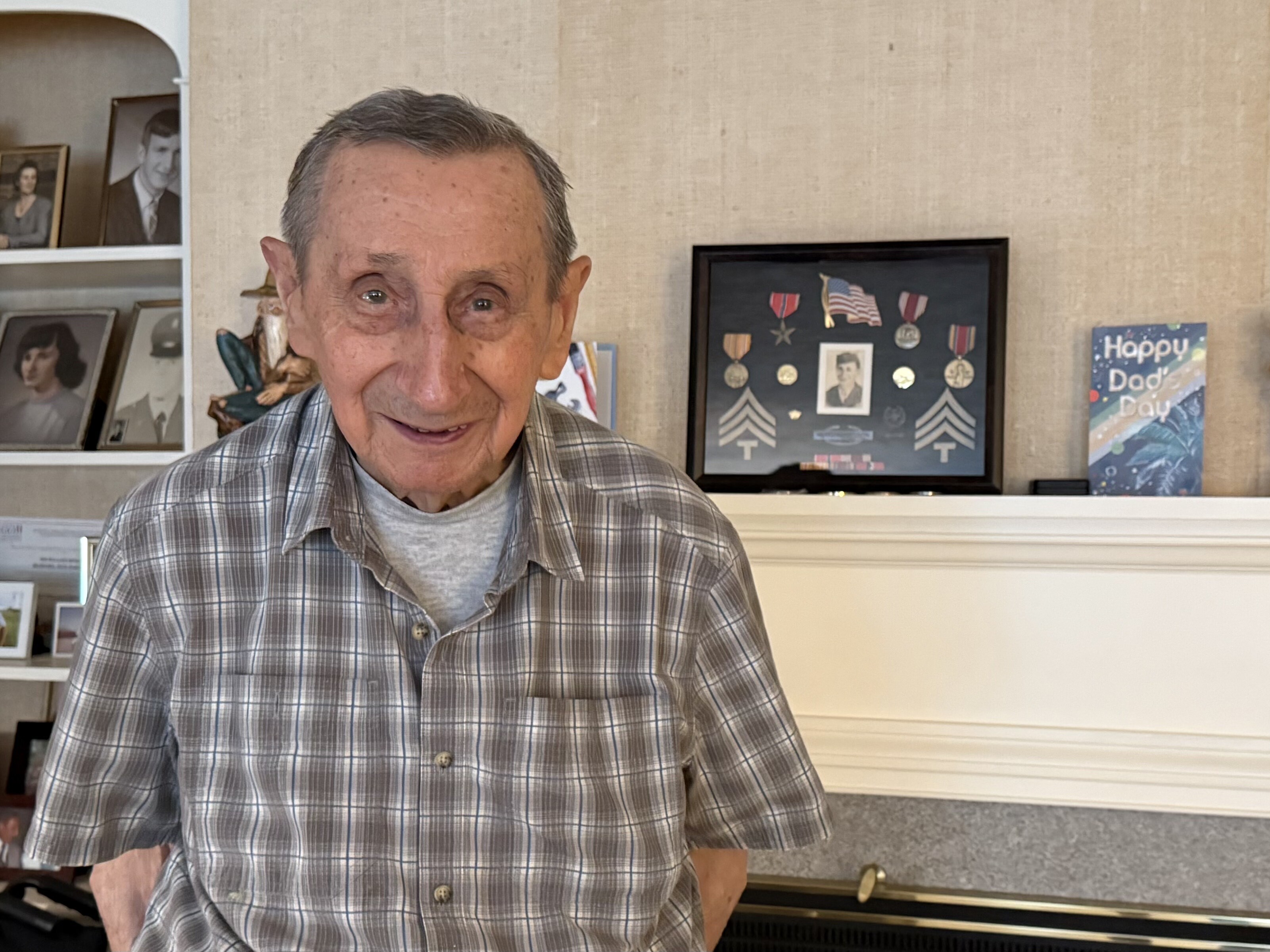
Coming up with the idea to write a story about Mr. Morin’s life was easy; seeing his house from our window, my mom and I immediately thought of Mr. Morin as a subject to write a profile about. The idea was right under our noses! When my family and I arrived at Mr. Morin’s front door, his niece, Mary, greeted us and said that his daughter, Marion, had just left after one of her afternoon visits. Mr. Morin and Mary invited us to settle down in the living room. During our interview, my family and I gained a deeper understanding of Mr. Morin’s life and experiences.
William (Bill) Morin was born into a Catholic family in November 1923, the youngest of eight children. His father was a security guard at Amoskeag Manufacturing Company. He was born in Manchester and grew up on the Piscataquog River. “It was my playground”, he called it. He spent much of his time there building rowboats that he would take onto the river. The boats could fit 3, maybe 4, people. Morin’s passion for building things and working with tools continued as he got older. He explained to us why he didn’t go to high school: “I went in to the high school for the first day…and when I went in the old fellow that was showing us through the high school on the West Side, he said ‘Don’t even look,’ he said ‘you can’t have no tool training for the first two years.’ And then I said, ‘Well, what the hell am I here for!?’”. And after that day, Morin did not return to school, and he got his first job picking apples at the age of 15. Later, he got a job with a construction company working under an older man who was a skilled carpenter, engineer, and architect. “So I got a good training. I was very lucky,” Morin reflected. When Morin and his late wife were both 17, they got married. “She was wonderful,” he said. They eventually had five kids together.
In 1942, when he was around 19 years old and had one or two children, Morin was drafted to serve in World War II. He was sent to basic training at Fort McClellan in Alabama. After 12 weeks of basic training, he was shipped out to fight in the Philippines. In the Philippines, he was the tracker, or leader, for his group of men. “He had to lead the men, but he didn’t know where he was going,” Mary added. The soldiers ate C-Rations and K-Rations in the Philippines and slept wherever they stopped. For water, some of their men would make friends with the villagers; the locals would then lead the men to good drinking water. When asked if he’d ever been ambushed by the Japanese, Morin said, “They didn’t ambush us, they were just following us and we were following them.” He said that once in a while, they would send patrols behind the Japanese to surprise them. On the way back to the United States, there wasn’t much to do for three weeks on the boat besides poker and cooking. When reflecting on the sacrifices of war, he declared that “War is terrible.” That line sums up his reluctance to speak much about his time in service.
When the war was finally over, Morin continued his work as an apprentice carpenter under his mentor through a government-sponsored training program. After his training, he started his own business building houses (Morin Construction Company, now defunct). The first house that Morin built is on Montgomery Street in Manchester. Morin built a house over 50 years ago for him and his late wife to live in, and he has lived in it ever since. “I must’ve been building this whole area when I moved in here,” he said. “I don’t know how many houses I’ve built in Bedford, but a lot of them!” Morin taught his sons and his grandchildren how to build. His grandson was the one who built our house. He likes to remind us with a lit up face, “My grandson built that house!”
These days, Morin enjoys keeping busy by feeding his wood furnace with the chopped wood he has delivered to his house. He likes to load the wood onto his pickup truck and drive it “down cellar”. He was also chopping his own wood until recently. When asked what advice he would give to young people, Morin responded with “all through hard work!” He said hard work will keep you going through life; if you have it too easy, then it is easy to get idle and lazy. Morin said that to live long, you must have some kind of work that serves as your drive, motivating you. He never officially retired, as he continued to work, build, and stay busy. Throughout his life, Morin’s drive and passion was his building, because it was something that he loved to do!