Post-War Affordable Housing
Responding to a crisis
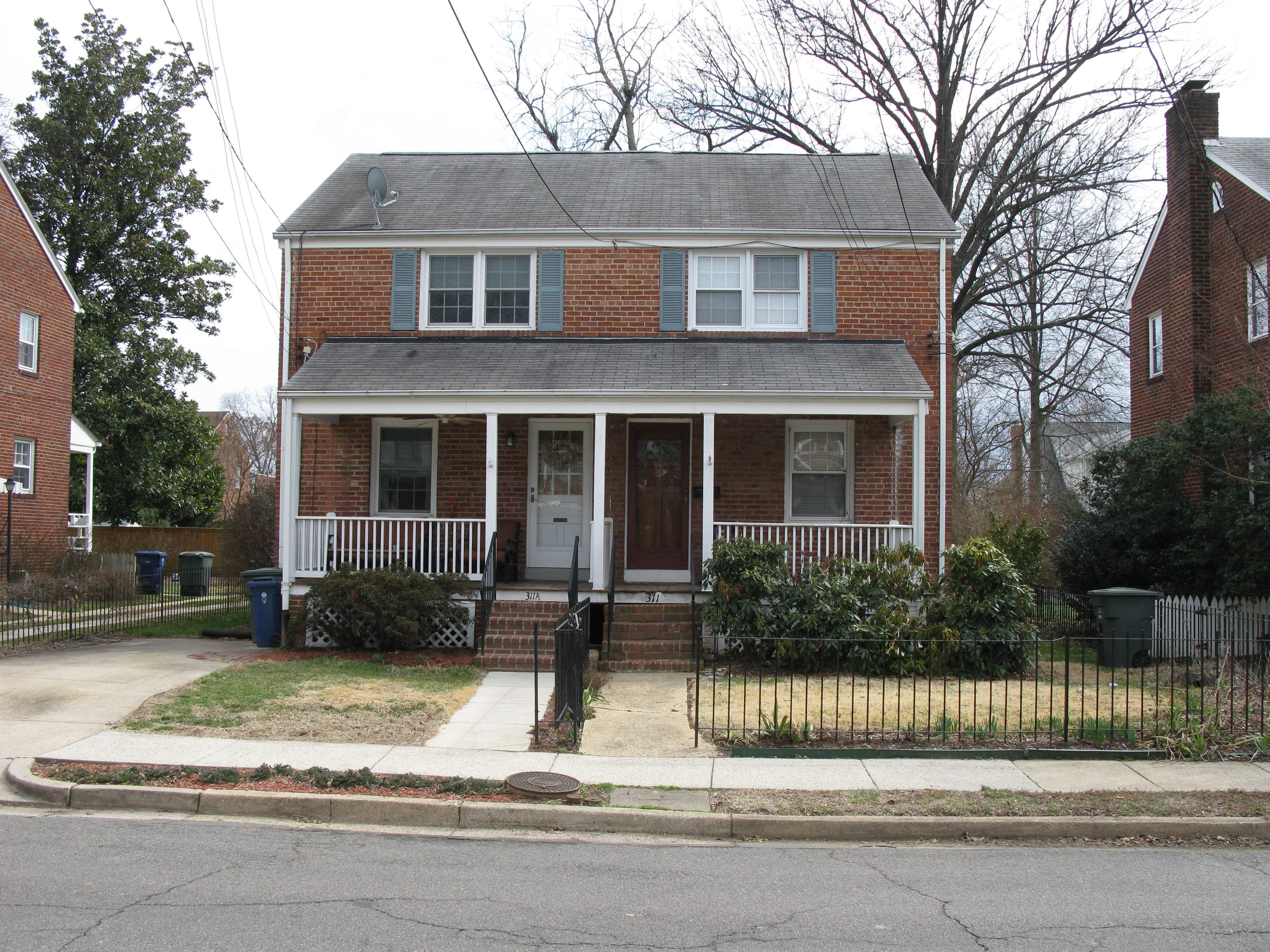
Eighty years after construction, these houses continue to provide affordable (if only relatively) housing, this one on E Del Ray at 311 and 311A.
The existential national threat of World War II brought total war mobilization to the US economy. Demand for raw materials far outstripped supply: the Army wanted steel for its tanks and trucks, the air arm for its fighters and bombers, and the Navy for its warships. In response the federal government, using its war powers, created a highly complex system of priorities under which specific producers could order, or be refused orders, for a wide range of raw materials, including steel, copper and, surprisingly, bricks and lumber. Those millions of new troops had to be housed in thousands of large barracks and supported in an array of other buildings, and as a result civilian housing construction ground to an almost complete halt for four years.
At the end of the war a tidal wave of millions of service personnel returned home to find no housing. The federal priority system was hastily rejigged to help meet this need. The Reconversion Housing Program, announced in January 1946, provided certificates for specific housing projects allowing a builder to claim priority for the supply of building materials. Few builders applied for these, however, as they came with catch: it placed limits on the sales or rental prices the builders could charge, and only to WW II veterans.
One firm in Del Ray did avail themselves of these certificates, Mayflower Builders Inc. They created a plan for a brick-veneer duplex, each half having a footprint of 26 x 16 feet, two stories with a basement. The first floor had a kitchen, dining room and living room, and the second floor three bedrooms and a bathroom. In addition, duplex shared a single, but divided, open front porch 8 feet deep.