Lake Oswego Meals on Wheels: A Friendly Knock at the Door
For many Lake Oswego residents, Meals on Wheels is a familiar name. What may be less familiar is what actually happens each day to make sure local older adults receive not only nutritious meals, but also connection, support, and a reassuring check-in from someone who cares.
Three days a week, the day starts early for the team serving Lake Oswego's older adults. Chef Sara arrives by 6am to begin preparing meals, often baking desserts and dinner rolls from scratch before most people have started their morning. By 8am, Assistant Chef Geoffroy and kitchen volunteers join her—chopping vegetables, assembling salads, and preparing the day's lunch service.
Each home-delivered meal includes both a cold tray and a hot tray. The cold tray contains salad, dessert, and fruit, while the hot tray features the day's entrée, vegetables, and a fresh dinner roll. Volunteers carefully assemble and seal each meal before loading them into coolers for delivery.
By 11am, volunteer drivers arrive and head out across the community. Most routes take between 60 and 90 minutes.
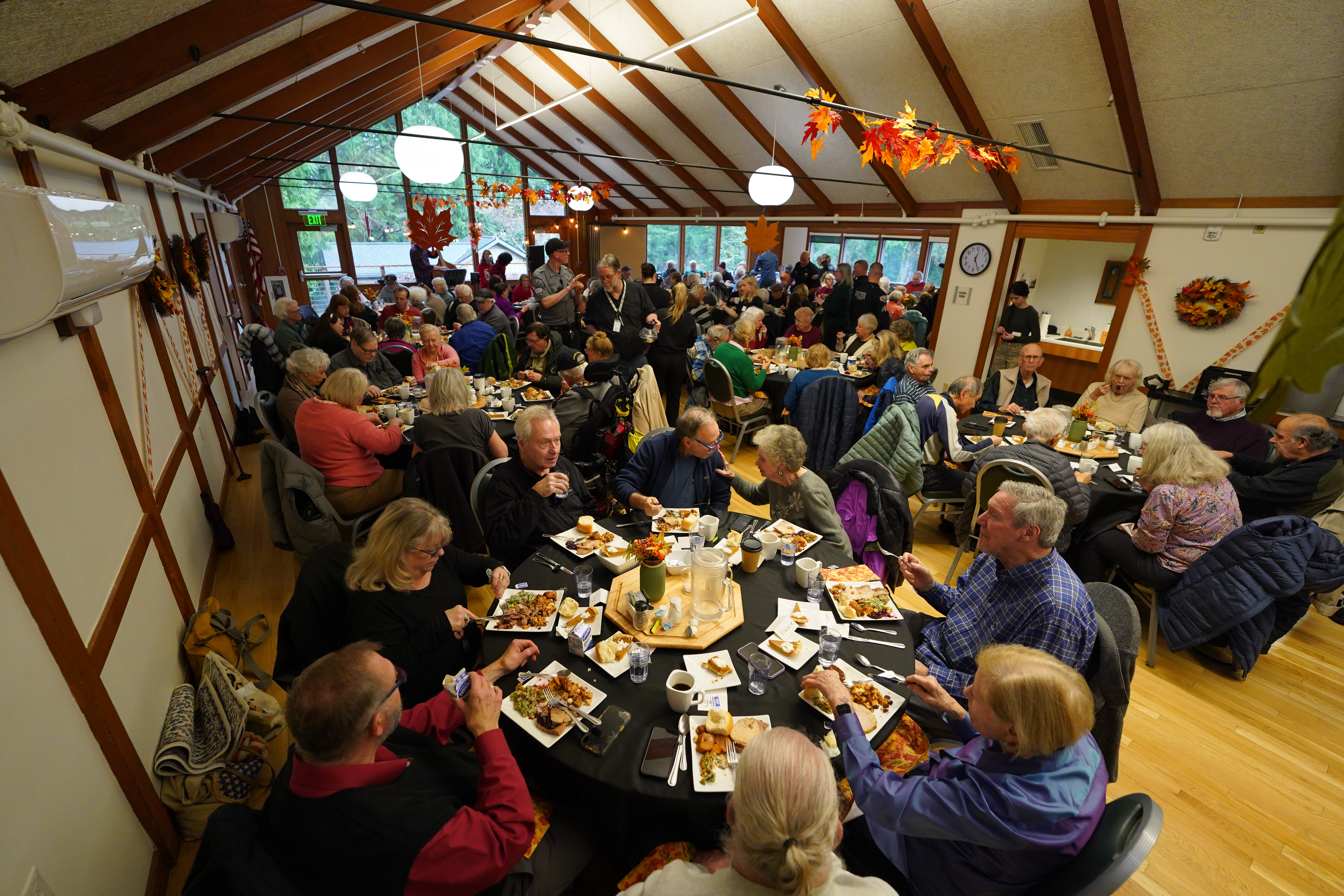
After the deliveries leave, attention shifts to the in-person lunch service at the Lake Oswego Adult Community Center. Local volunteer groups help set tables, serve coffee and tea, distribute meals, and assist with cleanup. For many participants, lunch is about much more than food.
"We provide a welcoming, safe space for people to come and be with their friends, have a meal, discuss current events or life happenings, and create a real sense of community with one another," says Program Coordinator Michael Buck.
Today, the program serves adults aged 60 and older. Meals are offered for a suggested donation of $5, but no one is turned away if they cannot contribute. In recent years, Green has seen demand steadily increase while many participants find it more difficult to make donations due to rising costs and fixed incomes.
The need may surprise some people in a community like Lake Oswego.
"Many of our participants live in nice homes but are on fixed incomes," Green explains. "Some aren't able to get to the grocery store easily, and others can no longer stand for long periods of time to prepare meals for themselves."
The role Meals on Wheels plays moves far beyond nutrition. The program's Client Services Coordinator helps connect participants with community resources, social services, and other forms of assistance. For those receiving meals at home, the daily visit can be an important source of human connection.
"Sometimes that friendly knock on the door is the only social interaction someone has had in one to three days," Green says.
That visit also provides peace of mind. If a participant is unexpectedly not home, staff follow up to make sure everything is okay. If they cannot reach the individual, they contact emergency contacts or request a wellness check.
Stories like that of one longtime participant illustrate the program's impact. Green recalls a woman who lived independently in her own home until she was 100 years old. She credited the meals and the relationships she built through the program as key reasons she was able to remain there rather than moving into a care facility.
Despite its success, the program faces growing challenges. Rising food and personnel costs, combined with reductions in federal, state, and county social service funding, create ongoing pressure as demand continues to increase.
"We're expected to do a lot more with less," Green says.
Volunteers remain essential to meeting that need. From preparing meals to serving lunch and delivering routes, the program depends on community members who are willing to give their time. Opportunities are available throughout the year for those looking to get involved.
Looking ahead, Green's hope is simple: to continue serving Lake Oswego's older adults in a meaningful way.
For the hundreds of local seniors who rely on these meals—and the friendships, support, and connection that come with them—that work makes all the difference.
To learn more about volunteering or supporting the program, visit lakeoswegomealsonwheels.org.