Becoming Ironmen: How Four Mercer Island Friends Turned Discipline, Friendship, and Grit I
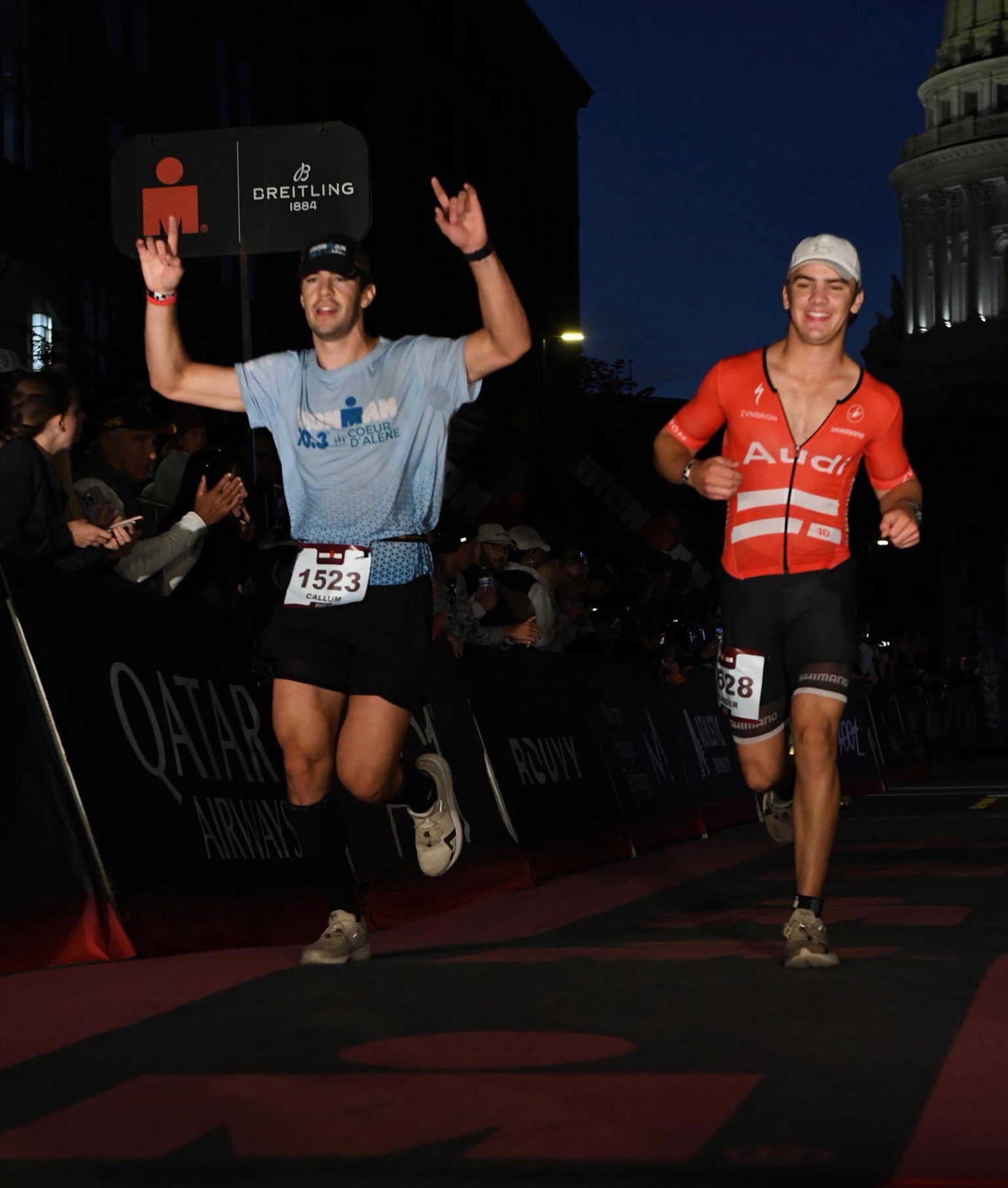
On Mercer Island, it’s common to see young athletes running loops around Pioneer Park or racing bikes along East Channel Bridge before sunrise. But every so often, a group comes along that pushes the limits of what’s expected—physically, mentally, and personally. This year, that group was four former Islanders: Max Hughes, Leander Schatz, Callum Neher, and Callum Iverson—all college students who decided to take on one of the hardest single-day athletic feats in the world: the Ironman.
Their journey didn’t begin with elite-level training or lifelong dreams of endurance sports. In fact, like most Mercer Island kids, they grew up playing team sports, balancing school with practices and squeezing in weekend games. It wasn’t until college—across campuses in Colorado, Wisconsin, and Boston—that they found themselves searching for something new, something that could match the challenge and structure they once found in high school sports.
For Max, a junior at the University of Colorado Boulder, endurance racing filled a gap he didn’t expect. “After high school ended, I missed having something to train for,” he says. “I wanted a new challenge.” He remembers watching his parents compete in races when he was young—quietly planting the seed that doing something like an Ironman was possible.
Leander, now at the University of Wisconsin–Madison, felt that same pull. “I realized I’m someone who needs something on the horizon,” he says. “This sport brings out an emotional and physical state I don’t get anywhere else.”
Callum Neher, studying at Boston University, discovered endurance sports almost by accident. It was never about talent, he insists—it was about discipline. “Long-distance events don’t require skill,” he says. “It’s the ultimate test of who you are. You find out if you’re willing to work when it isn’t fun.”
And then there’s Callum Iverson, also at CU Boulder, who had to leave college lacrosse behind after transferring schools. Endurance sports filled the void. “My friends inspired me. I didn’t even want to do an Ironman at first,” he laughs. “Once Max and Leander signed up, I folded. One of the best decisions I’ve made.”
From Idea to Ironman
The group’s first major test came during their freshman and sophomore years—a 50-mile ultramarathon. It was brutally long but unexpectedly transformative. They proved to themselves they could suffer, and more importantly, they could suffer together. That race sparked something bigger.
In early 2025, with school and part-time jobs already in full swing, they sat down and agreed: Let’s stop talking about the Ironman. Let’s sign up.
No more “someday.” No more “after college.” They committed.
The Reality of Training
Ironman training is a second job—15 to 18 hours per week of swimming, biking, and running, on top of classes, exams, and plenty of late-night study sessions. Their weeks were a blur:
- 3,000m interval swims
- 100-mile bike rides
- 18-mile long runs
- Early alarms
- Late-night sessions after work
- And discipline that stretched far beyond motivation
“The hardest part wasn’t physical,” Max says. “It was mental. Burnout hit hard. Sleep was basically optional some weeks.”
Lifestyle choices, more than the miles themselves, proved the greatest test. “The people who succeed in this aren’t the strongest,” Neher explains. “They’re the ones who make the right decisions every day.”
Still, despite the exhaustion, the monotony, and the sheer fatigue of juggling college life with an Ironman schedule, none of them considered quitting. “We’d never let each other,” Leander says simply.
Race Day
Race day arrived with a swirl of nerves, excitement, and months’ worth of sacrifices bubbling to the surface. Max remembers lining up for the swim with a kind of calm he didn’t expect. “Once I started moving, it became methodical,” he says. “Drink water. Eat food. Keep going.”
For others, the emotional stakes were even higher. Iverson had to withdraw from Ironman Wisconsin after getting COVID the week of the race—a devastating blow after nearly nine months of training. “The hardest part was not being there with the guys after everything we went through together.”
Those who did race describe moments that pushed them to their edges. Neher calls miles 2 through 13 of the marathon “the pit of despair.” For Leander, the first five miles felt nearly impossible—until his feet finally numbed and he found a rhythm. The final miles tested Max in ways he didn’t expect; caffeine and grit kept him upright.
But crossing the finish line—whether in person or in spirit—was something none of them will forget. “When Max’s mom said, ‘Now you’re an Ironman for the rest of your life,’” Leander says, “that stuck with me.”
What They Want Others to Know
The group agrees on one thing: people misunderstand what it takes to attempt something like this at their age.
“Everyone assumes we’re super dialed or perfect,” Max says. “We missed workouts. We lived normal college lives. Anyone can do this if they’re willing to stick with it—especially when it’s messy.”
Neher puts it more bluntly: “The only difference between us and anyone else is that we decided we wanted it—and followed through.”
What’s Next
They’re not done. Not even close. A 100-mile run is already on their collective bucket list.
But more than medals or distances, what they’ll carry with them is the community they built through suffering and discipline—one built on Mercer Island fields years ago and strengthened across college campuses nationwide.
Four friends. One massive challenge. A shared belief that ordinary people can do extraordinary things with the right mindset—and the right people beside them.