The Circle of Support: Fueling Creativity, Curiosity, and Opportunity for Every Student
What $1.6 million can sustain, what it can grow, and what becomes possible when a community invests in its students.
The cover of this magazine tells a very Mercer Island story. Veteran IMS science teacher Doug Davis is leaning in with the great grin we all know, talking with eighth grader Kekoa Tang across a lab table. A microscope sits in front of Kekoa, with test tubes and science materials nearby. There’s no oversized check, no podium and no ceremonial handshake. It’s simply a teacher connecting with a student, surrounded by the tools of learning. The photo captures the kind of moment happening in classrooms across Mercer Island every day: questions being asked, curiosity taking hold and learning coming to life.
That’s what your generosity looks like when it reaches a classroom. Over the years, Mercer Island Schools Foundation donors have helped put science curriculum, microscopes, classroom materials and countless other resources into the hands of teachers and students. At that point, no one is thinking about the donation that helped make it possible. They’re thinking about the lesson, the question in front of them and what they might discover next.
Greg and Jennifer Rosenwald and Tema Burkey are among the hundreds of Mercer Island community members whose generosity helps make moments like this possible. By the time a gift reaches a classroom, the gift itself has almost disappeared. In its place might be an experiment, a book, an instrument, an opportunity that makes history come alive, or a teacher with the resources to make learning more engaging and meaningful.
One person gives. A teacher turns that gift into opportunity, and a student gets to learn from it. That is the Circle of Support behind Mercer Island schools.
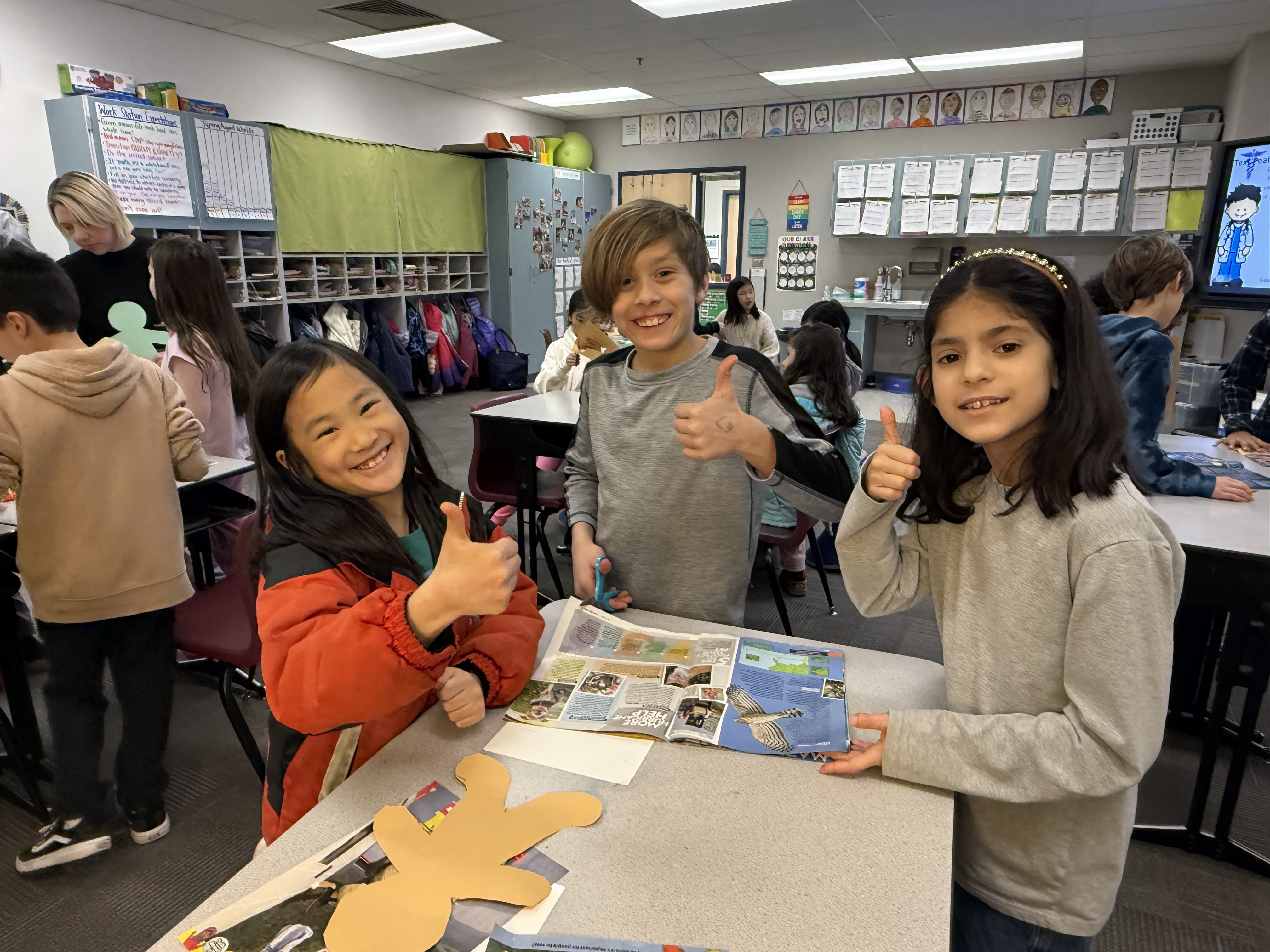
If you’re a parent, you know those days: the ones when your child comes home already talking about something that happened at school before they’ve even put down their backpack. For a third grader, it might be working with a professional actor and director to learn Shakespeare, figure out iambic pentameter, rehearse together, put on the costumes and finally take the stage as a class for A Midsummer Night’s Dream.
Or maybe it’s an elementary student swept into an interactive Oregon Trail simulation where history suddenly stops being names and dates on a page and becomes something they can step into and understand in a completely different way.
At Islander Middle School, orchestra students learn from professional artists who introduce new musical traditions and help them hear their instruments in a different way. At MIHS, filmmakers are creating award-winning work with professional-level equipment, science students are using advanced tools to explore real-world questions, drama students are building confidence through improv, and art students are creating lasting work around the idea of belonging.
These experiences are different, but they share a purpose: giving students another way into learning. Sometimes they simply have a great day at school. Sometimes they discover a strength or interest they didn’t know they had. And sometimes one of those moments points them in a direction they never expected.
We talk about education in terms of curriculum, programs, grants and budgets because those are things we can measure. But some of the most meaningful outcomes are harder to put on a spreadsheet: curiosity, confidence, connection, belonging, the willingness to take a risk or try again. Ask a teacher what a particular grant, program or resource meant, and chances are you won’t hear much about the item itself. You’ll hear about a student. Our teachers understand better than anyone what can happen when the right resource reaches the right child at the right time.
“Every year all our seventh graders get to witness the world of microbes. Without the contributions from our community, the students would only learn about them digitally or from text. Because we have microscopes for all the seventh-grade classes, this microscopic world comes to life in a big, and sometimes ‘icky’ way.”
– Doug Davis, Dean of Students / IMS Science Teacher
Most students will never know who helped fund something they used or an experience they loved. What they will remember is the teacher who saw something in them, the class where they finally felt successful, the subject they didn’t expect to love or the project that made them think, Wait, maybe I’m actually good at this. These are the moments that make learning come alive: sparking curiosity, encouraging questions, creating hands-on ways to learn and giving students the chance to discover where an interest might take them.
That is one reason supporting our schools feels so personal. The people who give aren’t only current parents. They are parents whose children graduated years ago, grandparents, alumni, neighbors and local businesses. Some remember a teacher who made a difference for their own child. Others simply look at the students growing up here and think, I can help make something possible for them.
“Supporting Mercer Island students deeply matters to me and my family. As I was taught to understand, we are teaching our children to understand that philanthropy is not charity, but a civic duty, and that education is the ultimate civic duty upon all of us. With four boys in the Mercer Island School District, we have witnessed firsthand and benefited directly from the impact of every dollar donated in support of the Mercer Island Schools Foundation. This is a legacy we are proud to share with our community — a legacy that lives in perpetuity.”
– Tema Burkey / Mary E. Groff Charitable Trust
That generosity matters in a particularly real way this year. Mercer Island School District is heading into the 2026–27 school year facing a budget deficit of close to $3 million. Community philanthropy was never meant to replace state funding. But when state dollars fall short of what it takes to provide the kind of education our students need and our community values, local support can help close the gap.
This year, the Mercer Island Schools Foundation has set its most ambitious fundraising goal ever: $1.6 million for Mercer Island students. It is a big number, but the number itself isn’t the most important part. What matters is what $1.6 million becomes.
It becomes strong curriculum and the materials and professional development teachers need to teach it well. It becomes microscopes and science equipment, books and hands-on learning tools, instruments and art supplies, technology, field trips and classroom resources. It becomes teacher enrichment grants that allow an educator to bring in an artist, deepen a lesson or give students access to something that would not otherwise be possible.
Put the right resource in the hands of a great teacher, and its value can become much bigger than its price tag. A microscope on a lab table is a tool; what matters is the conversation, questions and discovery around it. A camera is equipment until a student uses it to tell a story. An instrument is an object until a young musician discovers what they can make with it.
“One of my favorite parts of science is using scientific equipment, such as microscopes, and doing cool experiments. One time, when using the microscope, I got to see live amoebas. Another time I got to extract the DNA out of a strawberry! I love it when we are able to do things like this, because not only are they super fun, but I also have a much easier time understanding and remembering the information this way.”
– Kekoa Tang, IMS 8th grader
Community support also gives teachers something difficult to quantify: the ability to say yes more often. Yes to the resource that helps a student understand a difficult concept. Yes to the visiting artist who brings a new perspective. Yes to trying something different for the student who hasn’t connected yet. And yes to an idea that can deepen learning, create curiosity or open a door that wasn’t there before. For teachers, that support says we see the work you are doing, we value it, and we want to help.
On October 17, hundreds of Mercer Islanders will gather for Denim & Diamonds: dinner, dancing, cowboy boots and sequins, and a whole lot of people who clean up remarkably well for an event with “denim” in the name. It will be a great night, but the reason for it will show up long after the boots are back in the closet.
It will show up in classrooms across the island: in the conversation over a microscope, the third grader stepping onstage for Shakespeare, the young musician hearing something new, the student gaining confidence through improv or the filmmaker beginning to imagine what they might create next. Moments like these happen quietly all year long. Most will never make it into a newsletter, but some will stay with a student for years.
For more than four decades, Mercer Island families, alumni, grandparents, neighbors and local businesses have helped create opportunities for students they may never meet. That support rarely arrives in a classroom with anyone’s name attached to it. Instead, it shows up as a better question, a new way to learn, a resource a teacher can put to work or an unexpected moment when something finally clicks for a student.
And maybe that is the best way to think about the Circle of Support. We may give at one end of it without ever knowing exactly where our gift will land. But somewhere across our six schools, a teacher will use that support to open a door for a student and help them understand something, try something, discover something or see a possibility they hadn’t seen before.
Back at that science table, Kekoa may never think about who helped put the microscope in front of him. He shouldn’t have to. He gets to think about what he sees through it, what question comes next and where his curiosity might lead.
That is what we are investing in. We invite you to join the Circle of Support and help make those moments possible for the next generation of Islanders.
Find our more - or donate - on our website: https://mercerislandschoolsfoundation.com/