Science, Philosophy, and a Little Whimsy
How Windham artist David Martsolf turned retirement into his most creative chapter yet.
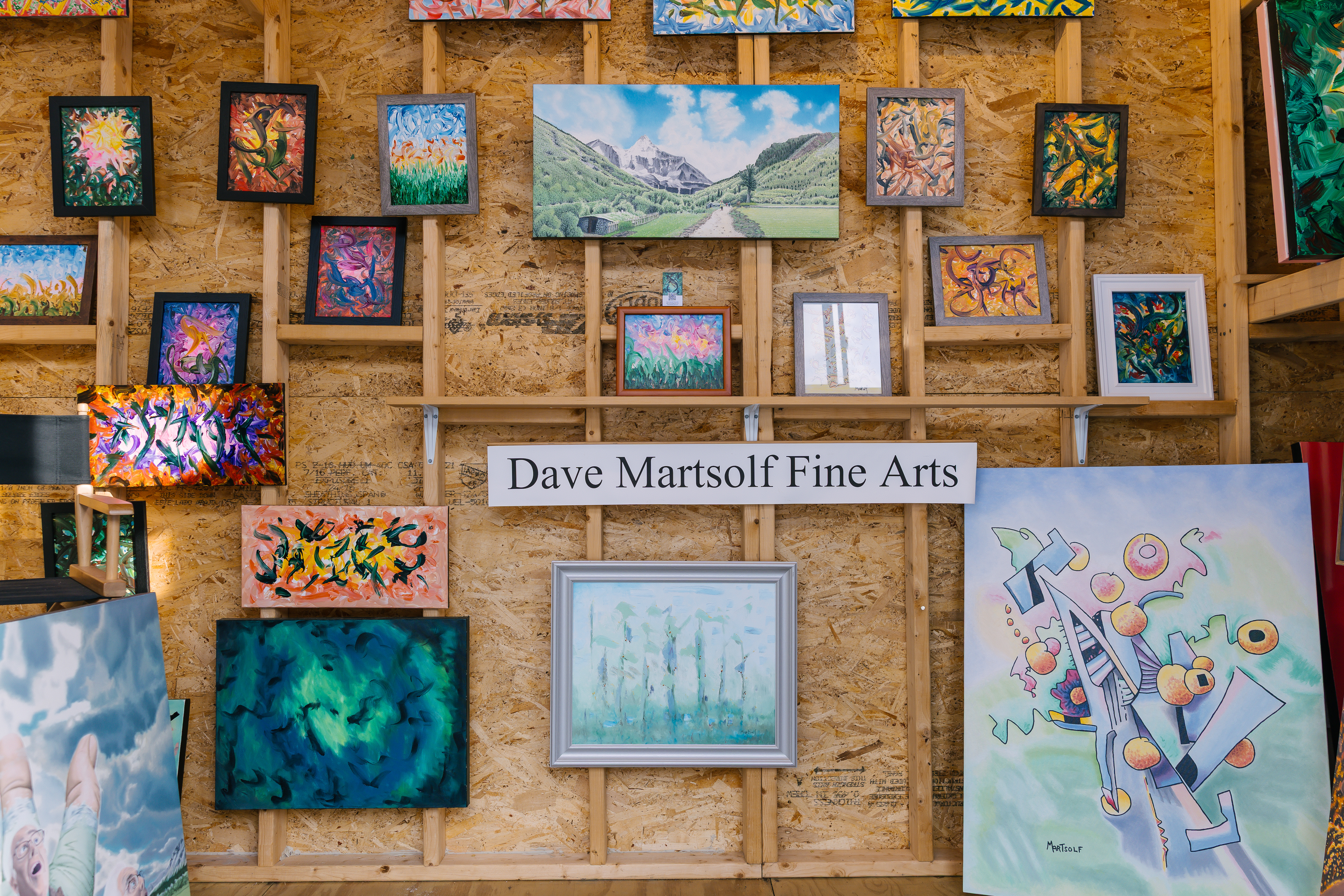
When my wife Emma and I, along with our daughter, moved to Windham in 2007, the house we purchased seemed more than large enough. At the time, I was a quality manager at an electronics company and had been creating and promoting my artwork as a sideline for over 30 years, having never made enough money to take care of my family. When I finally retired from corporate life in 2017, I turned my attention more fully to my art career. Today, our house, though empty-nested, no longer seems large enough. It is filled with paintings, my in-house art studio, and all of my associated paraphernalia. I even built an outside art shed to hold my ever-increasing inventory.
Why does the inventory continue to grow? In my early days, I became focused on artwork that spoke to a personal, deep-seated inner desire to communicate thoughts and feelings regarding our shared life experiences with others. I found it difficult to do this through the normal day-to-day pleasantries and concerns of our shared, but short-lived experiences. Through my university studies in art history (Brad Pitt’s Mr. Smith take notice!) I became very conversant with the surrealistic art style. I then used it as a language with which I hoped to express my ideas on science, philosophy, and the human condition, and at times, simple whimsy. That paradigm continues today. As a result, most of my work is not really suitable for the nondescript wall space behind our living room couches. Although I have won awards over the years and my work is in private collections around the world, including one piece owned by the University of New Hampshire, to this day, I create far more than I sell.
By way of my background – my father and grandfather were both architects. As a result of my exposure to this profession and my subsequent diligence, I spent three years of my undergraduate work in the architecture department at the Massachusetts Institute of Technology. As the years progressed, I found that the call of the Fine Arts profession, though more difficult to monetize, grew stronger. I transferred to the University of New Hampshire to complete a Fine Arts degree while working nights at a large commercial printing house, and later at the local manufacturing site of an international electronics company in order to keep my family housed and fed.
Today, my major medium remains oil on canvas, some works of which measure over six by four feet. I also continue to build a collection of portfolio books filled with ink, colored pencil, or watercolor drawings on paper. My oil paintings tend to fall into the genre of photo surrealism, with collections of relevant objects arranged within a unified, illusionistic space. My sketches early on were of recognizable objects, but have evolved over time into more fun-loving, freer line drawings as though tracing the path of an invisible object bouncing off the walls of a cage (the picture frame), or of sub-atomic particles colliding and splitting apart in a cloud chamber. In these works, the line drawing is completed in seconds, in essence, the kung fu of the drawing. Once completed, I look at the sketch and begin to see hidden shapes and three-dimensional forms. If the sketch strikes me as well-balanced and visually appealing, I will use colors, a fine ballpoint pen, or both to bring out the volumes so that others can grasp my imaginative scene. Even then, my friends often see different objects and landscapes. Freedom rings!
Currently, with so much new artwork throughout our household (even in our basement and above the garage), I am attempting to limit my oil paintings to major pieces while continuing to create more small, whimsical drawings that evoke smiles from the general public. It is either that or build another outdoor shed.
To see more of David's work, visit martsolffineart.com